Commercial glass & glazing · Utah, Idaho & Wyoming
Storefronts, curtain wall, entrances and insulated units for commercial construction — quoted as a package, in writing, with lead times stated before anything is ordered. Replacement and retrofit work too.
Broken storefront or a unit that won't secure? Call (435) 255-8505 or email info@vinduglass.com with URGENT in the subject — we board up to make the premises safe, then return to glaze.
From a single failed sealed unit in an office to a whole storefront elevation. We work to the building's use — what the glass has to survive decides what gets specified.
Aluminum storefront glazing — repair, re-glaze and full replacement of framing, transoms and bulkhead glass.
Aluminum and frameless glass entrances that have to open several hundred times a day and keep closing properly.
Fogged, blown or failed sealed units. The unit is replaced; the frame stays. In most cases the opening never has to come apart.
Where glass sits in a door, near the floor, or anywhere the building code calls it a hazardous location.
Break-ins, storm damage, vehicle strikes. Securing the premises comes first — glazing follows on a booked visit.
Glazed elevations above ground floor, surveyed before anything is quoted — access decides as much as the glass does.
Glass inside the building envelope — partitions, wall mirrors, shelving and tabletops cut to a template.
For portfolios rather than single addresses: surveys, planned replacement and a standing number to call.
Most of our work comes through the person carrying the schedule — the contractor, the developer, the manager responsible for the building. The job is judged on whether it landed when it was promised.
New-build glazing packages priced from the drawings and sequenced to the programme. Shop drawings, lead times, and a date you can put on a schedule.
Multiple addresses, one address to write to, and a written quote that survives being forwarded to an owner.
Storefronts and entrance doors that have to look right at opening time. Work scheduled around trading hours.
Partitions, internal screens and sealed units replaced with the floor still occupied and left clean.
Apartment and condominium glazing at volume — the same unit, the same spec, across a whole block.
Safety glazing where it is required, and work that can be done outside the hours the building is in use.
Commercial glass is chosen for what it has to do — hold a person up, stay together when it breaks, keep the heat out, or keep the building shut. This is the short version of the conversation we have on site.
| Glass | What it does | Where it goes |
|---|---|---|
| Annealed | Standard float glass. Breaks into shards, so it is limited to positions the code does not call hazardous. | Fixed windows above sill height, interior non-impact positions |
| Tempered | Heat-treated to roughly four times the strength of annealed. Breaks into blunt granules rather than shards. | Doors, sidelights, low-level glazing, anything within reach of a door swing |
| Laminated | Two panes bonded to an interlayer. Cracks but holds together, so the opening stays closed after impact. | Security-sensitive frontages, overhead glazing, storm exposure |
| Insulated unit | Two panes with a sealed cavity. Cuts heat gain and condensation; fogging means the seal has gone, not the glass. | Conditioned space — offices, storefronts, anywhere running air conditioning |
| Low-E coated | A microscopically thin coating that reflects heat while passing daylight. Usually specified inside an insulated unit. | West and south elevations, glazed frontages carrying a cooling load |
| Reflective / tinted | Reduces glare and solar gain, and changes how the elevation reads from outside. | Large glazed façades, curtain wall, matching an existing building |
| Fire-rated | Holds its position and integrity for a rated period. Specified by the drawing, never substituted. | Protected corridors, stair cores, rated partitions |
Positions described as hazardous locations are set by the building code, not by preference. Where the code calls for safety glazing, that is what is fitted — and it is itemized on the quote so you can see it.
On a new build we take off from your elevations and schedules. On an existing building we come and measure. Either way the opening is known before a price exists.
Line-itemed and fixed. Glass, frame work, access and labour shown separately, so nothing has to be taken on trust.
Booked against your programme, or around trading hours on an occupied building. You are told who is coming and when, and told early if a lead time moves.
Beads seated, unit square, door closing properly. Dust sheets up, offcuts out, glass swept. We walk it with you before we leave.
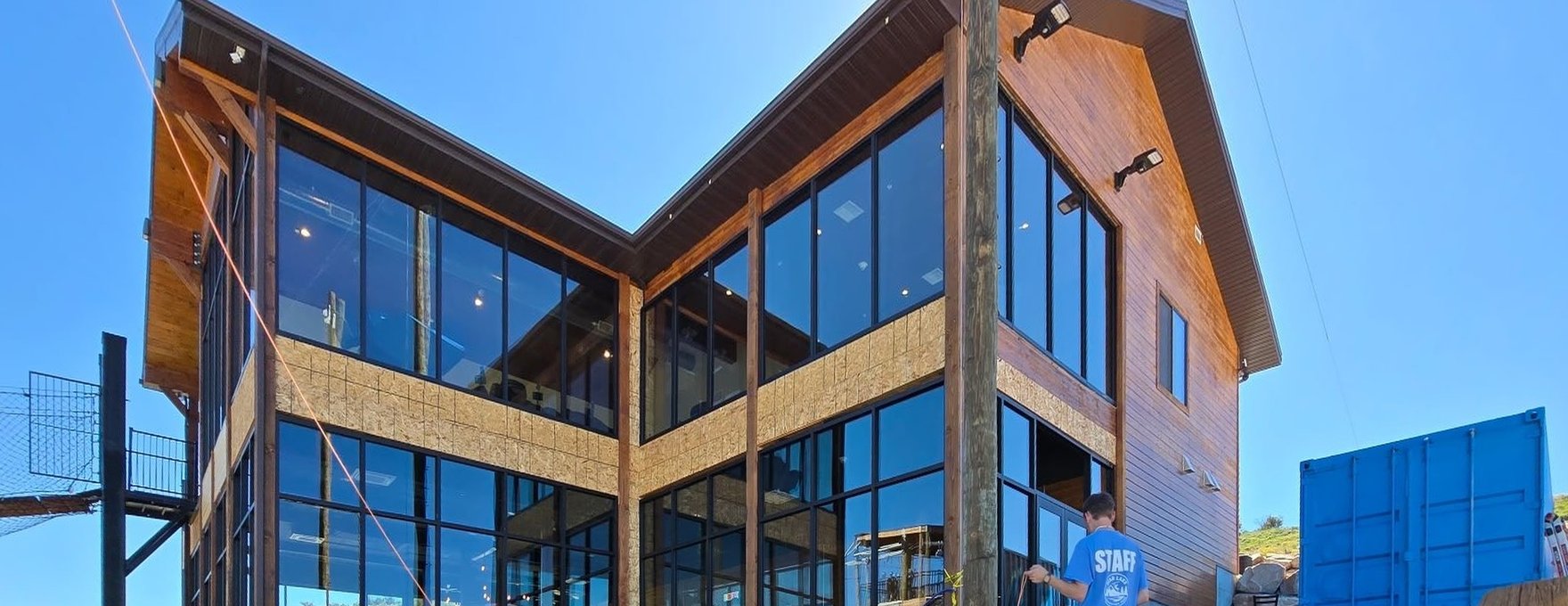
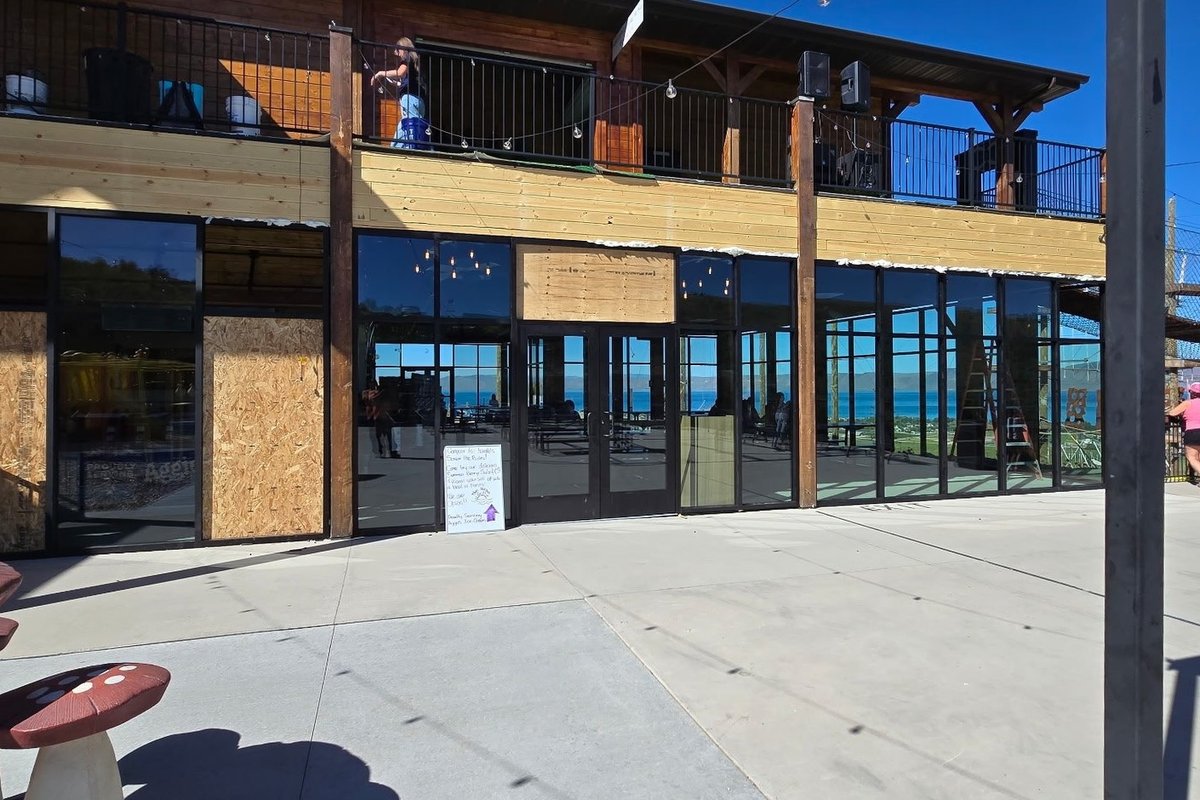
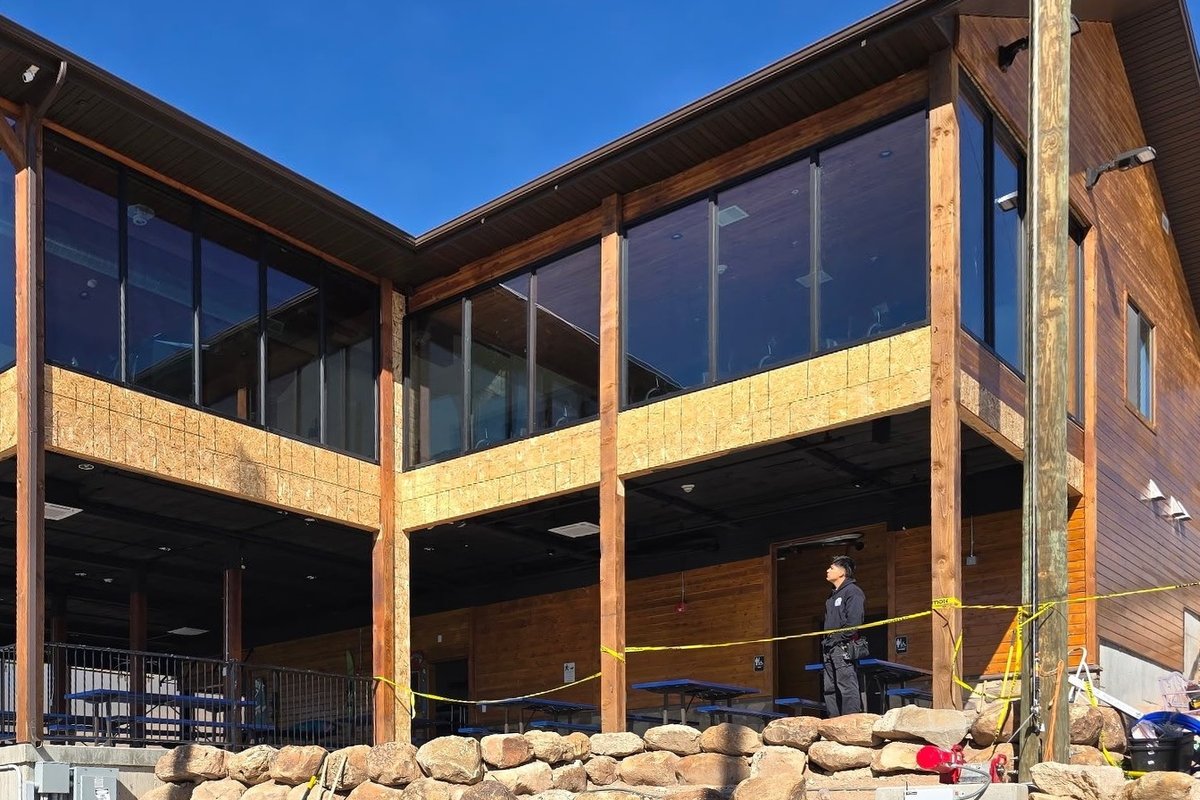
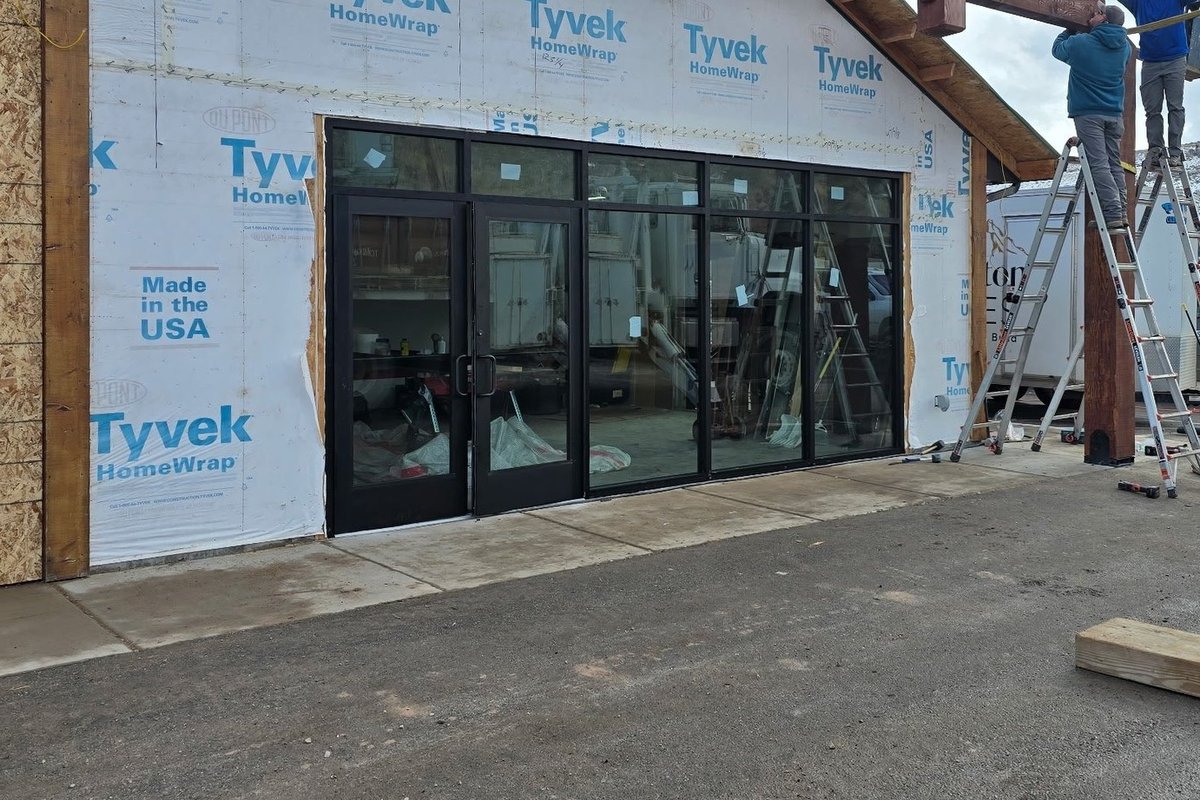
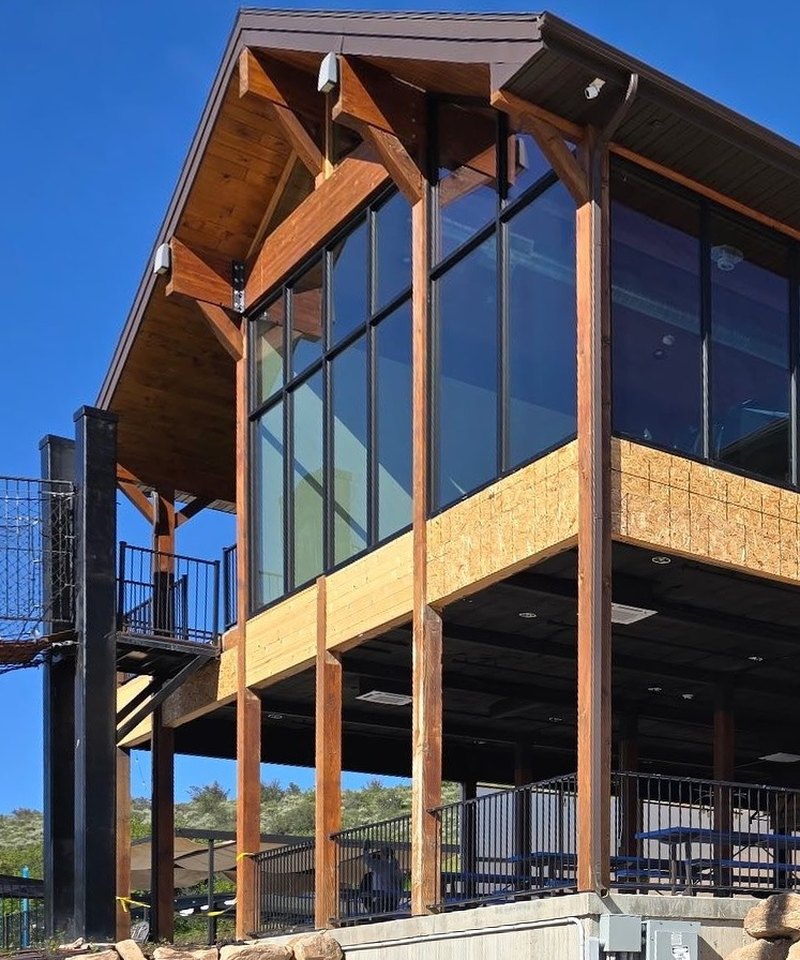
A new two-storey building in Garden City, Utah. Storefront and entrances at ground level, window wall above, and glazed gable ends set between the timber posts — supplied and installed as one package, through a Bear Lake winter.
Over thirty years in the glass trade, which mostly shows up in the dull parts. Knowing which storefront systems are still sourceable and which have to be adapted. Recognising a failed seal from the pattern of the misting rather than guessing. Measuring an opening that is forty years old and no longer square, and ordering to what is there.
That experience is the reason the quote is fixed before the work starts. A measurement taken properly is a price that does not move.
If you want to see a job closer to your own building before you commit, ask — we would rather show you the right one than the nearest one.
Request a site visitThe Wasatch Front is home ground and most of our work is within a morning of it, but we travel for commercial jobs. Tell us where the building is and we will tell you straight away whether we can get to it.
Drawings, a schedule, or just the address and what needs doing. Call or email — the quote, the spec and what was agreed come to you by email, so you have it all in writing.
(435) 255-8505 info@vinduglass.comMon–Fri · Urgent jobs answered outside those hours